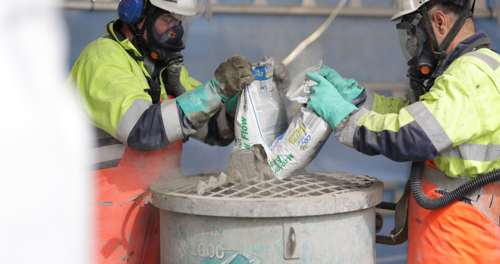


The work involved rehabilitating approximately 320 m² of sulphate-damaged concrete inside an underground tank at the gas processing plant. Manual methods posed challenges associated with hand-arm vibration and noise exposure, limiting the scope for continuous day and night operations.
Working with Shell, Linjebygg developed a robotic hydro demolition solution to remove damaged concrete while reducing the need for personnel to work inside the confined space.
Engineering for a four-week work window
Only four weeks were allocated for work inside the tank within a six-week shutdown window. Before mobilisation, the partners invested in engineering, 3D modelling, customised robotic tooling and full-scale testing at Linjebygg’s facilities at Hjelset. This preparation allowed the team to verify the method and train personnel before work began on site.
“The biggest challenge was developing a solution that could operate with precision inside the underground concrete structure while maintaining quality and keeping personal exposure at absolute minimum.”
— Stein Rune Gussiås, Project engineer, Linjebygg.
Reducing exposure and supporting delivery
According to the project team, the rehabilitation combined robotic concrete removal with specialist expertise in manual wet spraying, concrete repair and quality verification through core sampling and pull-off testing. Combining robotics with traditional craftsmanship allowed the team to optimise safety, productivity and quality throughout the rehabilitation process.
“The robotic solution took away a lot of risks, and it also limited the confined space entry tasks, which is a huge importance for Shell. We don´t want to put people into these types of environments if we can avoid it.”
— Roger Øien, OR & CSU Engineer, Shell.
Collaboration and customer recognition
Shell highlighted open communication and a willingness to explore alternatives as important parts of the collaboration. Engineering, testing and personnel training helped the partners prepare a different approach to the rehabilitation work.
The project received the Shell Goal Zero Hero Award in June 2026 for exceptional effort, strong collaboration and outstanding commitment to safe execution.
The team also identified potential for the approach to inform future rehabilitation of industrial and marine concrete structures.
“This has been a success story. With the people, the trust and the technology, we find a way to make a difficult job better and safer.”
— Roger Øien, OR & CSU Engineer, Shell.
Project facts
- Rehabilitation area: Approximately 320 m²
- Concrete removal depth: Approximately 25 mm, or until sound concrete was reached.
- Allocated work window inside the tank: Four weeks
- Additional shutdown time: Six weeks in total, of which approximately four weeks were available for work inside the tank.
- Recorded work-related injuries: Zero
- Readiness for filling: Two days ahead of the planned milestone.
- Recognition: Shell Goal Zero Hero Award, 2026
For more information about robotic hydro demolition and specialised concrete rehabilitation solutions for demanding industrial environments, please contact our special projects team with project engineer Stein Rune Gussiås.